
Five Ways A Week By Week Pregnancy Journal Nurtures Emotional Wellness Every Trimester
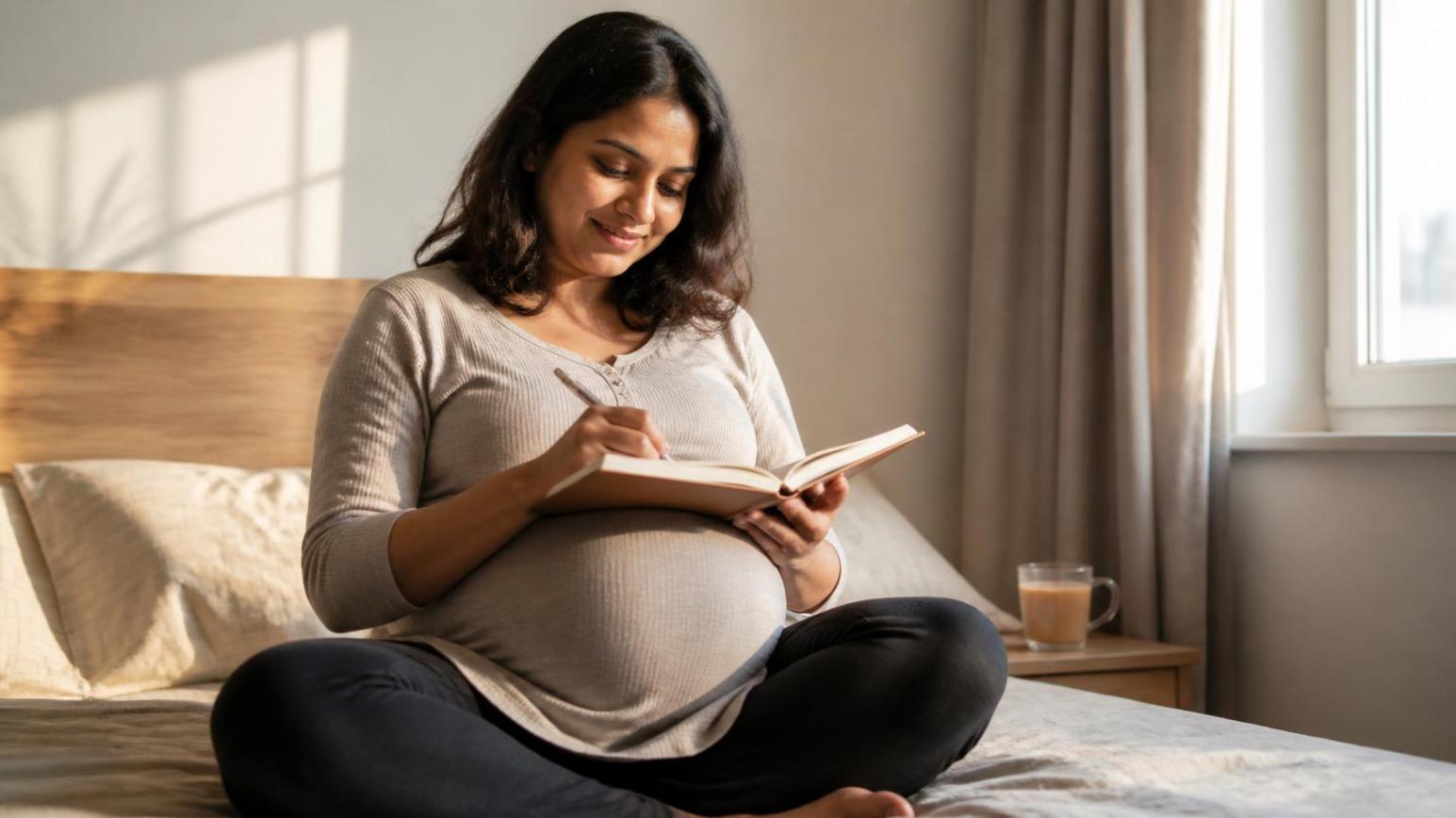
Pregnancy distorts your perception of time. One moment you are taking your first pregnancy test, and the next you are preparing to give birth. Keeping a week by week pregnancy journal is a useful exercise for you to stay mindful during the most rapid and chaotic phase of your life.
Writing a pregnancy journal is extremely helpful for your emotional well-being during each of the three trimesters and is an immensely better activity than scrolling through pregnancy apps. Here are five benefits of keeping a daily journal.
Anxiety Has A Place To Go
First trimester anxiety is almost always ignored in the countless discussions about pregnancy, and its symptoms are some of the most challenging. The fatigue and constant swings in hormones make it even harder to resist the impulse to google every single new symptom.
Journaling helps break the cycle. It is extremely difficult to fall asleep with a worry on your mind and replay it throughout the night. One of the journaling moms we spoke to referred to her panic attacks as a “dump,” meaning she used her journal page to offload every spiraling thought before bed. A journaling page can hold the countless burdens your mind can no longer carry.
It Establishes a Weekly Habit of Noticing
By the second trimester, journaling shifts from anxiety management into something quieter and more grounding. This is the stage where many women start paying closer attention to their bodies in ways that feel genuinely new.
Movements that would have been easy to dismiss in the first trimester now carry weight. A flutter here. A shift in posture there. Guided journal prompts during this phase encourage mothers to slow down and record these small physical changes before they blur together.
It sounds simple, but the second trimester moves faster than most people expect. Writing it down is the only way to actually catch it.
It Transforms Anxiety Into Something Tangible
The third trimester is an emotional rollercoaster due to the mixed feelings of excitement, dread, anxiety, and anticipation of what is to come, such as the possible fear of the unknown of labor and the mother questioning if she is going to be a good mother.
Most pregnant women feel these emotions, but they experience them in isolation. Dread and anxiety become so ingrained that the only way to remove them is to externalize them. Fears are externalized when they are put onto a tangible object like paper, and then they can be analyzed and even somewhat laughed about.
Multiple mothers have said that when they reflect and realize that they have actually been capable far beyond what their anxiety made them believe, they feel much calmer and at peace.
It Preserves Memory During A Season That Moves Too Fast
There is an undeniable contradiction to the experience of pregnancy. When you are actually going through it, it feels almost like it never ends, but when you have finally given birth, it feels like it flew by.
Emotional wellness revolves around more than just riding the waves of difficult emotions, but rather ensuring that the happy moments are not lost to the chaos of day-to-day life. A weekly journal space helps with memory preservation.
You are able to jot down that your spouse shed happy tears at the anatomy scan, or that you indulged in a late-night pickle and peanut butter snack with no guilt, and that memory is locked. Later, when you are more fatigued and lacking sleep and your partner is also under the same emotional strain, those journal entries provide comfort and help ground you back to your identity.
It Connects You To A Bigger Support System
When journal prompts are created to correlate with baby milestones, packing your hospital bag, and varying birth plan preferences, journaling feels like a piece of a larger care strategy. Multiple prenatal wellness coaches have designed the journaling practice to serve as a strategy alongside therapy, prenatal yoga, and support groups.
Emotional support, when combined, is what creates the difference. Pregnant women who have support from a partner, a healthcare provider, a community network, as well as a personal reflective practice, report more stable emotions as well as improved coping skills during labor itself.
A Small Habit, A Big Return
There is no need for a lengthy commitment or complicated craft skills. As little as five minutes a week can be used to write a few sentences or tape a photo to the page if you are feeling motivated. The most important part is consistency.
Fighting through the fatigue and nausea that makes the thought of writing feel unbearable is one of the most worthwhile things you can do for yourself. This is exactly why we should protect our physical wellness and why it matters: the small daily acts of care compound into something much larger than any single entry.
Pregnancy is a lot of emotional and physical work simultaneously. Keeping a journal is not indulgent; it is self-defense. This will pay off in the future when your child is older and asking questions.
You will appreciate having done this when your child asks what pregnancy felt like and you do not have to make something up. You will have the evidence for how hard you worked, and more importantly, how much you felt.


